Studio Soundproofing vs. Studio Acoustics: What’s the Difference?
DIGI Acoustics
Introduction
If you’re building a recording studio, podcast studio, or home studio, you’ve probably come across the terms soundproofing and acoustics. Many people think they’re the same — but they’re not. In fact, soundproofing and studio acoustics serve very different purposes, and confusing the two can ruin your studio’s performance.
At DIGI Acoustics, we specialize in studio soundproofing and acoustic treatment in Hyderabad, helping creators, musicians, and professionals achieve world-class sound quality. Let’s break down the difference.
1. What is Studio Soundproofing?
Soundproofing is about blocking sound from entering or leaving the studio.
Goals of soundproofing:
Stop external noise (traffic, neighbors, AC units) from disturbing your recording.
Prevent your music, podcasts, or voiceovers from leaking outside.
Create a quiet, distraction-free space for creativity.
Soundproofing techniques:
Acoustic insulation inside walls.
Soundproof doors and windows.
Floating floors to stop vibrations.
Sealing air gaps that let noise escape.
👉 Think of soundproofing as creating a sealed bubble of silence around your studio.
2. What is Studio Acoustics?
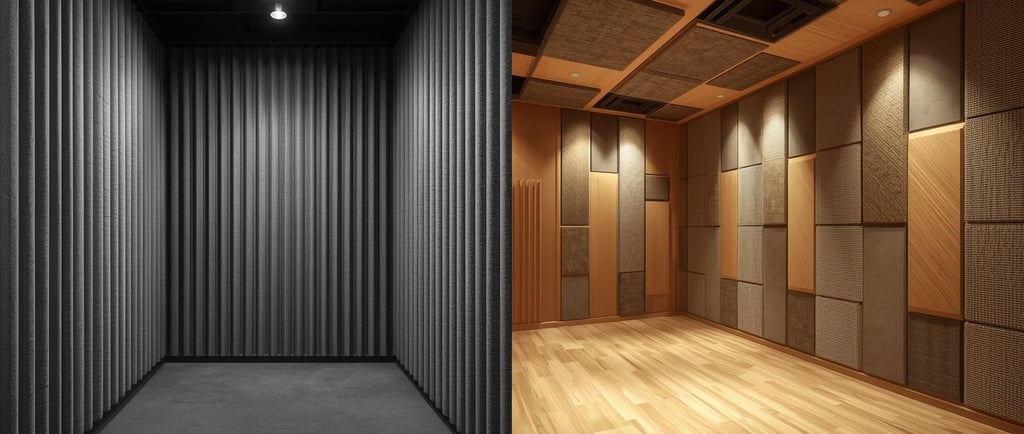
While soundproofing keeps noise out, acoustics control the sound inside the room.
Goals of studio acoustics:
Reduce echo and reverberation.
Balance frequencies (bass, mids, treble).
Improve speech clarity for podcasts and vocals.
Ensure instruments and mixes sound accurate.
Acoustic treatment solutions:
Acoustic wall panels to absorb mid/high frequencies.
Bass traps to control low-end boom.
Acoustic ceiling tiles to reduce reflections.
Diffusers to create a natural, spacious sound.
👉 Acoustics = shaping sound for professional quality recordings.
3. Why Both Soundproofing and Acoustics Matter
Without soundproofing → external noise leaks into recordings.
Without acoustics → recordings sound echoey or unbalanced.
For a professional studio setup, you need both working together.
4. Common Misconceptions
❌ “Foam panels will soundproof my studio.”
Wrong. Foam only treats acoustics; it doesn’t block outside noise.
❌ “If I soundproof my studio, I don’t need acoustic panels.”
Not true. A silent room without treatment will still sound bad.
❌ “DIY methods are enough for professional results.”
Basic fixes can help, but professional studios require tailored solutions.
5. Applications in Different Studios
Recording Studios
Soundproofing: Keeps traffic and outdoor sounds away.
Acoustics: Makes instruments sound natural and accurate.
Podcast Studios
Soundproofing: Stops background noise and disturbances.
Acoustics: Delivers clear, intimate voice recordings.
Home Studios
Soundproofing: Minimizes household distractions.
Acoustics: Improves mixes and playback.
DIGI Acoustics provides end-to-end solutions for all types of studios.
6. Professional Studio Solutions with DIGI Acoustics
Our process includes:
Assessment – Analyze room size, location, and purpose.
Soundproofing design – Create noise isolation strategies.
Acoustic treatment design – Place panels, traps, and tiles strategically.
Installation – Complete turnkey execution.
👉 The result? A studio where silence and sound work in perfect harmony.
FAQs
What’s more important, soundproofing or acoustics?
Both are equally important. Soundproofing blocks external noise; acoustics shape the internal sound.
Can acoustic panels block outside noise?
No. Panels improve sound inside the room but don’t stop external noise.
Do small home studios need soundproofing?
Yes, especially if you live near traffic or noisy neighborhoods.
Is soundproofing expensive?
Costs vary. DIGI Acoustics provides budget-friendly to premium solutions in Hyderabad.
Can DIGI Acoustics help with both soundproofing and acoustics?
Absolutely. We offer end-to-end studio design services.
Do podcast studios need bass traps?
Yes, if you want balanced sound and reduced low-frequency rumble.
Conclusion
The secret to a professional studio isn’t just fancy microphones or speakers. It’s about understanding the difference between studio soundproofing and acoustics — and knowing how to use both effectively.
At DIGI Acoustics, we design and build world-class studios in Hyderabad, tailored to your needs and budget. Whether you’re recording music, podcasts, or voiceovers, we’ll help you achieve studio-quality sound that inspires confidence.
👉 Ready to build your dream studio? Contact DIGI Acoustics today.
we provide expert acoustics and soundproofing solutions
Important Links
+91 9100720404
© 2026 DIGI Acoustics. All rights reserved.
2-22-1/173/1, Bhagya Nagar Colony, Kukatpally, Hyderabad, Telangana 500072
Address